توجه !
این رویداد خاتمه یافته است و اطلاعات موجود در این سایت صرفا جنبه آرشیو دارد
لطفا منتظر بمانید ...
0% Complete
English
رفتن به صفحه اصلی
ارائه مجازی مقاله
لیست نشست ها
ارايه پوستر- محور مراقبت پرستاری
مشخصات مقاله
کد مقاله
1405
منابع مقاله
عنوان
Nursing Care for Potential Pediatric Organ Donors in Disasters and War: Challenges and Strategies
نویسندگان
Latif Panahi - Somaye Pouy
چکیده
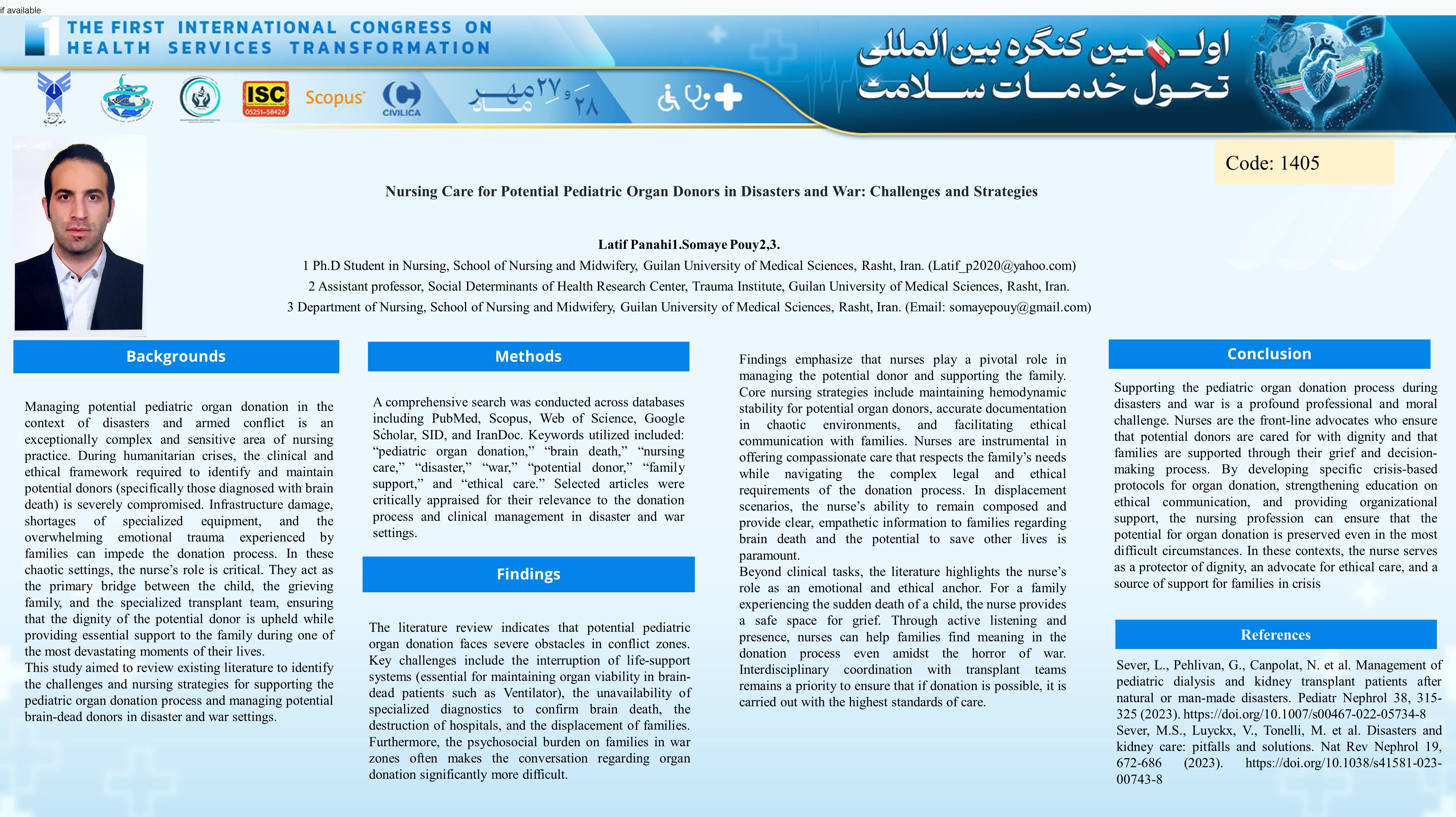
Introduction: Managing potential pediatric organ donation in the context of disasters and armed conflict is an exceptionally complex and sensitive area of nursing practice. During humanitarian crises, the clinical and ethical framework required to identify and maintain potential donors (specifically those diagnosed with brain death) is severely compromised. Infrastructure damage, shortages of specialized equipment, and the overwhelming emotional trauma experienced by families can impede the donation process. In these chaotic settings, the nurse’s role is critical. They act as the primary bridge between the child, the grieving family, and the specialized transplant team, ensuring that the dignity of the potential donor is upheld while providing essential support to the family during one of the most devastating moments of their lives. Aim: This study aimed to review existing literature to identify the challenges and nursing strategies for supporting the pediatric organ donation process and managing potential brain-dead donors in disaster and war settings. Methods: A comprehensive search was conducted across databases including PubMed, Scopus, Web of Science, Google Scholar, SID, and IranDoc. Keywords utilized included: “pediatric organ donation,” “brain death,” “nursing care,” “disaster,” “war,” “potential donor,” “family support,” and “ethical care.” Selected articles were critically appraised for their relevance to the donation process and clinical management in disaster and war settings. Results: The literature review indicates that potential pediatric organ donation faces severe obstacles in conflict zones. Key challenges include the interruption of life-support systems (essential for maintaining organ viability in brain-dead patients such as Ventilator), the unavailability of specialized diagnostics to confirm brain death, the destruction of hospitals, and the displacement of families. Furthermore, the psychosocial burden on families in war zones often makes the conversation regarding organ donation significantly more difficult. Findings emphasize that nurses play a pivotal role in managing the potential donor and supporting the family. Core nursing strategies include maintaining hemodynamic stability for potential organ donors, accurate documentation in chaotic environments, and facilitating ethical communication with families. Nurses are instrumental in offering compassionate care that respects the family’s needs while navigating the complex legal and ethical requirements of the donation process. In displacement scenarios, the nurse’s ability to remain composed and provide clear, empathetic information to families regarding brain death and the potential to save other lives is paramount. Beyond clinical tasks, the literature highlights the nurse’s role as an emotional and ethical anchor. For a family experiencing the sudden death of a child, the nurse provides a safe space for grief. Through active listening and presence, nurses can help families find meaning in the donation process even amidst the horror of war. Interdisciplinary coordination with transplant teams remains a priority to ensure that if donation is possible, it is carried out with the highest standards of care. Conclusion: Supporting the pediatric organ donation process during disasters and war is a profound professional and moral challenge. Nurses are the front-line advocates who ensure that potential donors are cared for with dignity and that families are supported through their grief and decision-making process. By developing specific crisis-based protocols for organ donation, strengthening education on ethical communication, and providing organizational support, the nursing profession can ensure that the potential for organ donation is preserved even in the most difficult circumstances. In these contexts, the nurse serves as a protector of dignity, an advocate for ethical care, and a source of support for families in crisis. Keywords: , , , war, nursing, , .
فایل ها
فایل پوستر مقاله
محتوای ارائه مجازی مقاله
نظرات
ثمین همایش، سامانه مدیریت همایش ها و جشنواره ها - نگارش 44.12.4

 فایل پوستر مقاله